Corporate sustainability teams
Justify your farmland transition programs. Connect regenerative ag investments to supply reliability, procurement costs and production continuity, giving finance and ERM colleagues evidence for funding decisions.


MAKING THE INVESTMENT CASE FOR SUSTAINABLE AG
We calculate the financial exposure of agricultural assets and regions to hazards and changing conditions.
Combining financial and feasibility analysis, we estimate the value of adaptation for farmland, facilities, and supply sheds.
And through Two Fields, our research initiative, we are developing tools to measure how soils respond to stress and inform financial risk models.
Schedule a callUnderstand how hazards and changing conditions could affect your business, evaluate the value of resilience investments already made, and assess where to invest next.
Each engagement is scoped around your specific business case and financial analysis needed.
Read More →Justify your farmland transition programs. Connect regenerative ag investments to supply reliability, procurement costs and production continuity, giving finance and ERM colleagues evidence for funding decisions.
Strengthen your positioning with LPs. Whether raising a new fund or managing an existing one, substantiate your investment thesis with evidence on property pricing, rental income, asset value and adaptation ROI, supporting both fundraising conversations and ongoing investor reporting.
Underwrite returns over the asset’s useful life. Test whether facility exposure, water availability and crop supply support the investment case. Assess how adaptation at the facility and across its supply shed could reduce the risk of stranded assets.
Protect the returns your institution depends on. Synthesize portfolio-wide weather and water exposure and local adaptation capacity to inform manager selection, allocation and oversight.
Weather threatens both agricultural production and the infrastructure behind it. Water availability depends on local hydrology, infrastructure and competing demands. Land cannot relocate, and biological resilience and soil function can take years to build.
Adaptation depends on local knowledge, available resources and the land’s biological capacity. These differences must be taken into account when pricing risk and evaluating investments in resilience.
Read More →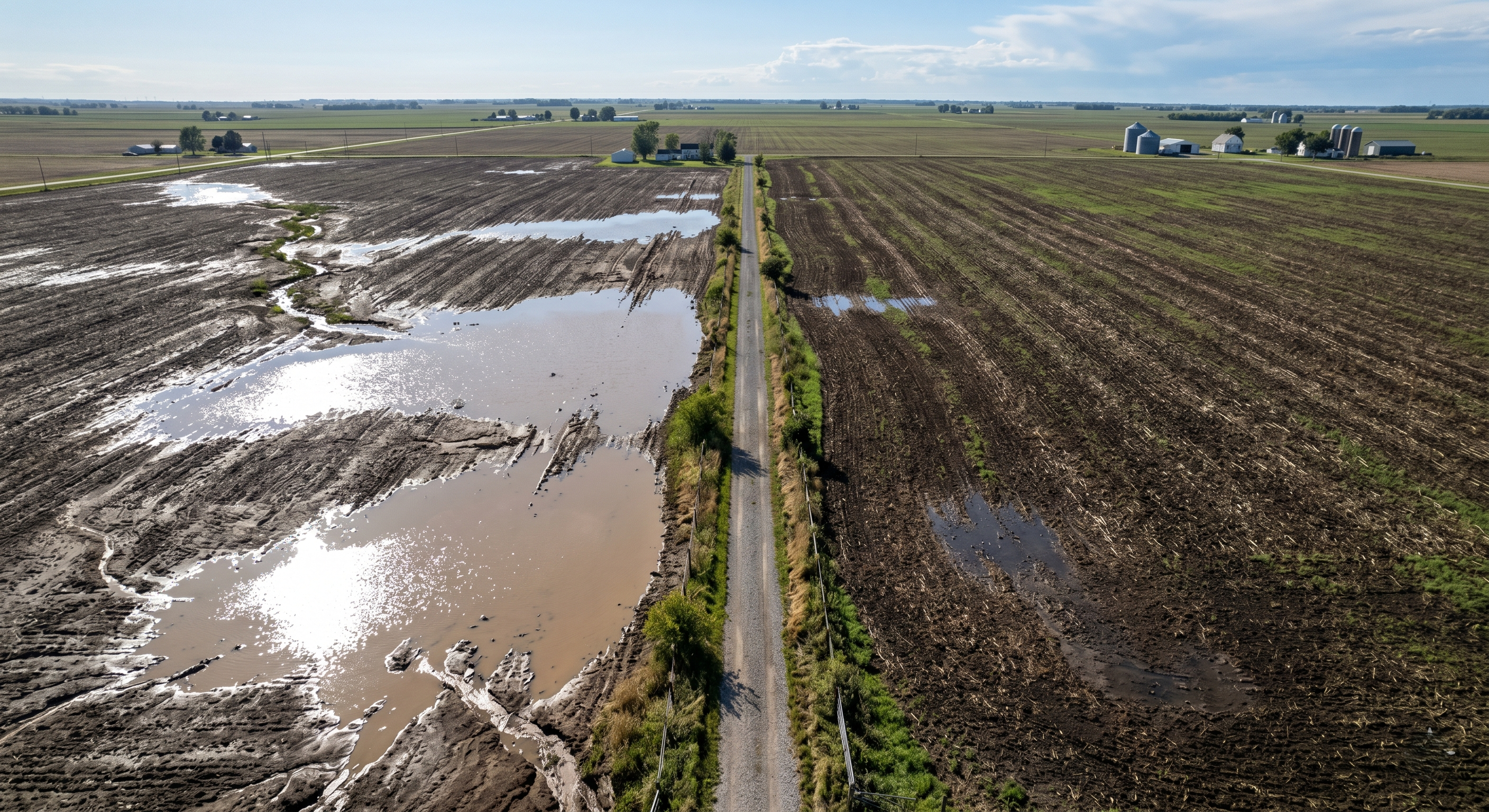
Soil classifications, ubiquitous in ag finance, assume that soils have a static set of attributes.
We know that's not the case: soils of the same type have dynamic function and absorb water, withstand drought and heat, and recover from stress differently.
Two Fields, TERRX’s research initiative, is developing ways to quantify dynamic soil function and its financial materiality for agricultural risk models.
Read More →